Domain Data API Migration Plan 2026: Switch Vendors Without Breaking Workflows
Switching a domain data API provider is not a search-and-replace task. Treat it like a production migration: map response fields, dual-run real workloads, prove usage reporting, and keep a rollback path until operators trust the new evidence.
Migration Is a Buying Decision
Most vendor evaluations end at selection: compare pricing, review coverage, run a proof of concept, and get procurement approval. The migration starts afterward, and that is where the expensive surprises usually live. A domain data API can sit inside release gates, domain portfolio audits, security alert enrichment, MSP reports, SSL renewal checks, and incident response scripts. If one response shape changes quietly, the downstream workflow can make the wrong decision with confidence.
This guide is for teams that already know they may switch providers. It does not repeat a generic DNS API, WHOIS API, IP lookup, or SSL checker primer. The job here is controlled migration: prove that the new platform can replace the old one in the workflows that matter, then retire the old integration without losing audit history, alert routing, or cost visibility.
Use this approach whether you are moving from separate point solutions, consolidating several providers, or replacing a platform whose pricing, support, endpoint coverage, or procurement posture no longer fits.
Verified Ops.Tools Surface for Migration Planning
The live Ops.Tools site and local OpenAPI output verify endpoint families for DNS lookup, WHOIS data, IP details, SSL checks, HTTP header analysis, and port scanning. The pricing page verifies one credit per API request across DNS, WHOIS, IP, SSL, port, and header lookups, monthly plans starting at $6.99/month, bulk processing, webhook support, HTTPS encryption, usage logging controls, interactive docs, a Postman collection, and an auto-generated TypeScript SDK.
Keep migration claims tied to those sources: the API docs, the pricing page, and the live tool pages for DNS lookup, WHOIS, IP data, SSL, HTTP headers, and port scanning. If a workflow uses Slack, Jira, PagerDuty, a SIEM, or a ticketing system through your own glue code, call it webhook-based or internally orchestrated unless a native integration is documented.
Migration Readiness Matrix
| Gate | What to prove | Do not cut over if |
|---|---|---|
| Endpoint parity | Every critical DNS, WHOIS, IP, SSL, header, and port check has a documented replacement. | A required check depends on an undocumented endpoint or manual export. |
| Schema mapping | Fields used by downstream systems map to stable normalized names. | A pass/fail rule still reads raw provider-specific fields. |
| Dual-run evidence | Old and new providers run against the same assets and disagreements are classified. | Differences are unexplained or hidden in logs. |
| Usage visibility | Finance and operations can inspect request volume by date and service. | The team cannot forecast recurring checks or bulk audit spikes. |
| Rollback | A feature flag, adapter setting, or job variable can move traffic back. | The old provider is cancelled before production workflows settle. |
Step-by-Step Migration Workflow
- Inventory every caller. Include cron jobs, CI/CD checks, dashboards, incident runbooks, security enrichment scripts, MSP reports, and one-off notebooks. A low-volume script can still be high risk.
- Classify decisions, not just requests. Record which fields decide pass, warn, or fail: DNS record values, WHOIS expiration dates, registrar names, IP ASN data, certificate validity, header score, and exposed port state.
- Build a normalized evidence model. Give downstream code stable names like
domain,recordType,registrar,expiresAt,asn,certificateDaysRemaining, andopenPorts. Keep raw JSON beside the normalized result for auditability. - Dual-run real manifests. Test production domains, staging domains, customer domains, parked domains, expiring domains, redirecting hosts, and intentionally failing examples. Do not rely on only
example.com. - Reconcile disagreements. Some differences are acceptable because providers parse WHOIS, DNS, or geolocation data differently. Classify each difference as source variance, field mapping error, cache timing, missing coverage, or true product blocker.
- Model usage with the new pricing unit. Ops.Tools pricing uses one credit per request. Count recurring monitors, CI checks, bulk audits, incident bursts, retries, and manual investigations separately.
- Cut over by workflow. Move low-risk reporting first, then scheduled audits, then release gates, then incident and security workflows. Keep a rollback control until alert owners accept the new evidence.
Commercial Risks to Settle Before Cutover
A provider switch changes more than endpoint URLs. It changes the commercial assumptions behind every recurring job. Some teams discover that a cheaper unit price is erased by retries, cache-bypass calls, duplicated checks, or separate providers for adjacent data. Others discover that a platform with stronger workflow coverage reduces maintenance cost even when the list price is not the lowest. Put those assumptions in the migration plan before the first production cutover.
Start with the request types that happen without a human pressing a button. Release validation, scheduled domain audits, certificate checks, webhook-triggered reruns, and incident enrichment can run every day. Manual lookups matter too, but automated calls usually define the real spend. Ops.Tools pricing describes one credit per request, so a migration plan should translate each workflow into expected request volume by service: DNS, WHOIS, IP, SSL, HTTP headers, port checks, and any email-detail checks that support sender posture.
Then separate provider migration cost from internal rewrite cost. A clean REST API and generated TypeScript SDK can reduce integration work, but they do not eliminate domain-specific decisions. Your team still needs to decide which WHOIS fields are authoritative when data is redacted, how to handle cached versus live results, whether IP location variance changes a security decision, and which certificate findings should block a deployment. Those choices belong in the review packet because they determine whether the migration is operationally safe.
| Risk | Migration question | Evidence to keep |
|---|---|---|
| Duplicate spend | How long will old and new providers run together? | Dual-run schedule and expected request volume. |
| Decision drift | Which normalized fields feed pass, warn, and fail rules? | Schema map with raw examples from both providers. |
| Hidden manual work | Which reports, exports, or tickets still need humans? | Runbook steps before and after migration. |
| Unsupported claims | Are integration claims documented or internally built? | Links to docs and architecture notes. |
Field Mapping Details That Usually Break First
DNS records are deceptively simple until a workflow compares arrays, TTLs, priorities, or TXT record quoting. WHOIS data is even more variable because privacy redaction, registrar formatting, and registry-specific fields change what "owner", "status", and "expiration" mean. IP data may include ASN, organization, PTR, country, or city context depending on the provider and plan. SSL data can expose validity, issuer, SANs, chain status, protocols, and cipher details. Header analysis may include raw headers, security score, CORS details, cookie attributes, and redirect behavior. Port results may include state, service label, response time, TLS metadata, and a scan summary.
Avoid letting downstream systems consume those provider-specific shapes directly. The migration layer should produce stable internal facts: expectedMxPresent, domainExpiresAt,registrarName, asn, certificateValid,certificateDaysRemaining, missingSecurityHeaders, and unexpectedOpenPorts. Keep the raw response beside the normalized fact so a responder can inspect the original evidence when a decision is challenged.
The most important migration test is not whether both providers return identical JSON. They will not. The test is whether both providers support the operational decision your team needs to make. If a release gate only cares that a production hostname resolves to an approved target, field-level differences in extra DNS metadata may be harmless. If a security review depends on registrar status or certificate chain validity, the exact mapping deserves deeper review before cutover.
API Examples for a Dual-Run Harness
The examples below use verified Ops.Tools routes from the generated SDK and OpenAPI output. They are not benchmarks. They show how to collect comparable evidence for migration testing.
cURL: collect replacement evidence
API_KEY="$OPS_TOOLS_API_KEY"
BASE="https://api.ops.tools"
DOMAIN="example.com"

curl -sG "$BASE/v1-dns-lookup" \
  -H "x-api-key: $API_KEY" \
  --data-urlencode "address=$DOMAIN" \
  --data-urlencode "type=MX"

curl -sG "$BASE/v1-whois-data" \
  -H "x-api-key: $API_KEY" \
  --data-urlencode "domain=$DOMAIN" \
  --data-urlencode "parseWhoisToJson=true"

curl -sG "$BASE/v1-get-ip-details" \
  -H "x-api-key: $API_KEY" \
  --data-urlencode "ip=8.8.8.8"

curl -sG "$BASE/v1-ssl-checker" \
  -H "x-api-key: $API_KEY" \
  --data-urlencode "domain=$DOMAIN"

curl -sG "$BASE/v1-analyze-http" \
  -H "x-api-key: $API_KEY" \
  --data-urlencode "url=https://$DOMAIN"

curl -sG "$BASE/v1-port-scanner" \
  -H "x-api-key: $API_KEY" \
  --data-urlencode "target=$DOMAIN" \
  --data-urlencode "ports=80,443"
TypeScript: normalize provider responses
type MigrationEvidence = {
  domain: string;
  dnsMxRecords: unknown[];
  registrar?: string;
  domainExpiresAt?: string;
  certificateDaysRemaining?: number;
  httpSecurityScore?: number;
  openPorts: number[];
  raw: Record<string, unknown>;
};

async function getOpsToolsJson<T>(path: string, params: Record<string, string>) {
  const url = new URL(path, 'https://api.ops.tools');
  for (const [key, value] of Object.entries(params)) url.searchParams.set(key, value);

  const response = await fetch(url, {
    headers: { 'x-api-key': process.env.OPS_TOOLS_API_KEY ?? '' },
  });
  if (!response.ok) throw new Error(`${path} returned ${response.status}`);
  return (await response.json()) as T;
}

async function collectMigrationEvidence(domain: string): Promise<MigrationEvidence> {
  const [dns, whois, ssl, headers, ports] = await Promise.all([
    getOpsToolsJson<{ records?: unknown[] }>('/v1-dns-lookup', { address: domain, type: 'MX' }),
    getOpsToolsJson<{ whoisJson?: { registrar?: string; expiryDate?: string } }>('/v1-whois-data', {
      domain,
      parseWhoisToJson: 'true',
    }),
    getOpsToolsJson<{ certificate: { daysRemaining: number } }>('/v1-ssl-checker', { domain }),
    getOpsToolsJson<{ analysis: { security: { score: number } } }>('/v1-analyze-http', {
      url: `https://${domain}`,
    }),
    getOpsToolsJson<{ ports: { port: number; state: string }[] }>('/v1-port-scanner', {
      target: domain,
      ports: '80,443',
    }),
  ]);

  return {
    domain,
    dnsMxRecords: dns.records ?? [],
    registrar: whois.whoisJson?.registrar,
    domainExpiresAt: whois.whoisJson?.expiryDate,
    certificateDaysRemaining: ssl.certificate.daysRemaining,
    httpSecurityScore: headers.analysis.security.score,
    openPorts: ports.ports.filter((port) => port.state === 'open').map((port) => port.port),
    raw: { dns, whois, ssl, headers, ports },
  };
}
Buyer Questions Before You Sign
Ask these questions while the old provider is still available. The answers should influence the contract, the implementation plan, and the decommission timeline. If the migration plan cannot answer them, the team is not ready to switch production workflows.
| Question | Why it changes the migration |
|---|---|
| Can we export usage by date and service? | You need volume evidence before cancelling the old provider. |
| Is the OpenAPI spec current? | Generated clients reduce hand-written migration glue. |
| Which claims are documented, not inferred? | Approval packets should not depend on sales-call memory. |
| How do webhooks fit our own automation? | Webhook support is not the same as every native incident-tool integration. |
Migration Cutover Checklist
- Every production caller has an owner, a retry policy, and a rollback switch.
- Every normalized field has a raw source field and a sample from the new provider.
- Usage export, billing owner, and expected monthly request volume are documented.
- Alert wording describes webhook-based workflows accurately when native integrations are not verified.
- Related runbooks link to the new API docs, live tool pages, and pricing model.
- The old provider remains available until scheduled, bulk, CI/CD, and incident workflows pass acceptance.
What to Reject During Review
Reject migration content and approval notes that collapse back into generic product comparison. "Provider A is faster" is not useful unless the test workload, cache behavior, and request class are visible. "Provider B has better integrations" is not useful unless the integration is documented or clearly described as webhook-based automation owned by your team. "Provider C is cheaper" is not useful unless the model includes retries, scheduled jobs, and bulk workloads.
Also reject any plan that treats all endpoint families equally. A team may be comfortable migrating DNS lookups first while holding WHOIS or SSL checks longer because those checks feed renewal, compliance, or incident processes. The right migration sequence follows business risk, not the order of routes in the API reference.
FAQs
When should a team migrate domain data API providers?
Migrate when the current provider blocks a required workflow through missing endpoint coverage, unclear pricing, weak usage visibility, poor SDK support, unreliable response behavior, or procurement terms that no longer match the workload.
How long should a domain data API migration dual-run last?
Use a dual-run window long enough to cover normal traffic, bulk jobs, release checks, and at least one incident or simulated incident. The exact length depends on your asset count, query frequency, and internal approval process.
Which Ops.Tools capabilities are safe to cite in a migration plan?
The live site and repo verify DNS lookup, WHOIS data, IP details, SSL checks, HTTP header analysis, port scanning, REST JSON responses, API key workflows, usage reporting, bulk processing, webhook support, OpenAPI docs, and an auto-generated TypeScript SDK.
Should a migration plan claim native Slack, Jira, PagerDuty, or SIEM integrations?
Only claim a native integration if it is documented by the vendor. If findings are posted through your own webhook receiver, CI job, SIEM collector, or automation layer, describe the workflow that way.
A clean migration gives the business a better vendor fit without making operators relearn every runbook at once. Keep the evidence model stable, keep raw responses available, and make the cutover boring on purpose.
Plan the migration against real Ops.Tools endpoints
Use the live tools, OpenAPI docs, pricing model, and account usage views to test your current DNS, WHOIS, IP, SSL, header, and port-check workloads before cutover.
Related articles
More guides from the same operational area.
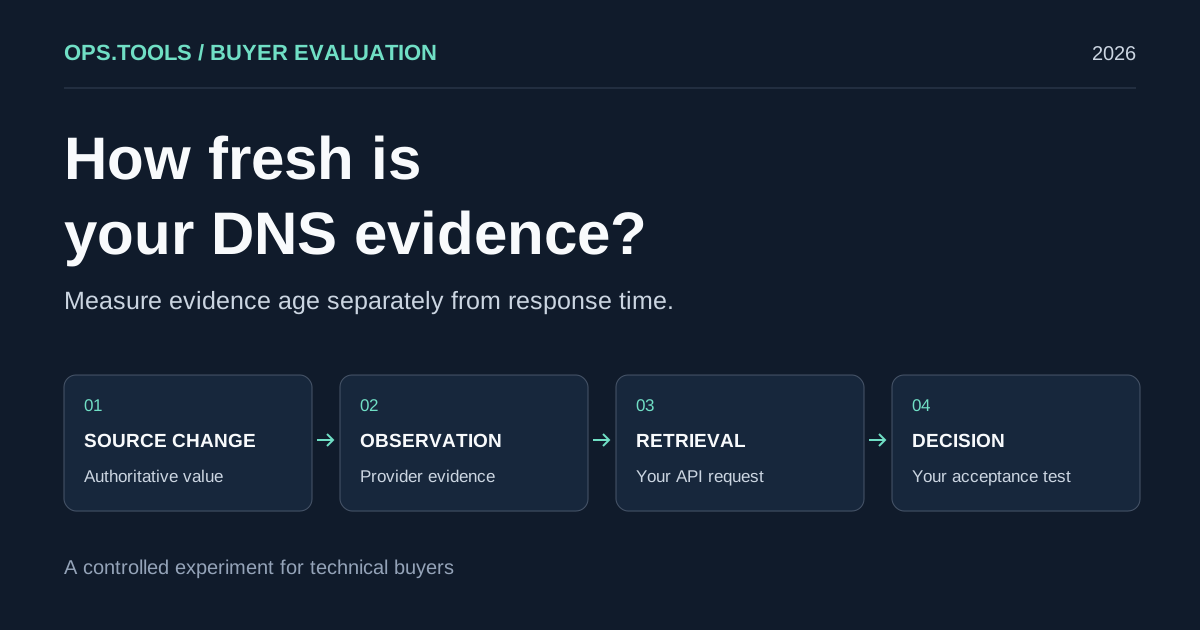
DNS API Data Freshness: A Buyer's Cache Evaluation Test
Evaluate DNS API data freshness with a controlled cache test, evidence timestamps, and buying criteria for release checks, domain audits, and security teams.
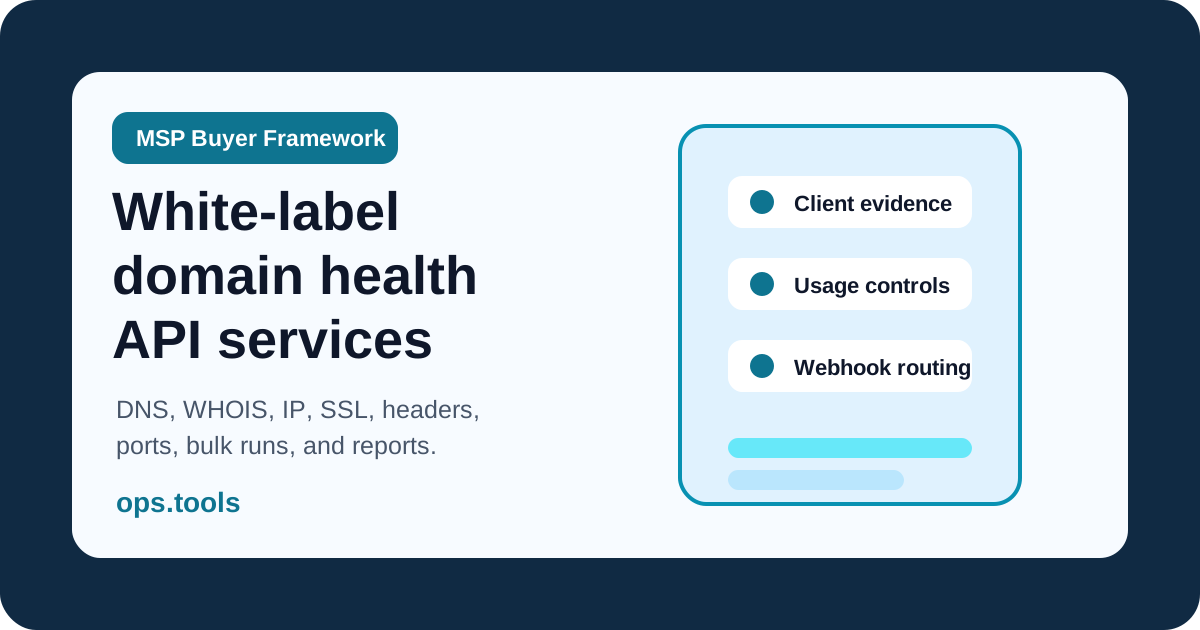
White-Label Domain Health APIs for MSPs: A Buyer’s Framework for 2026
Evaluate API-based DNS, WHOIS, IP, SSL, HTTP, and port evidence for branded MSP domain health services, bulk audits, usage controls, and client reporting.
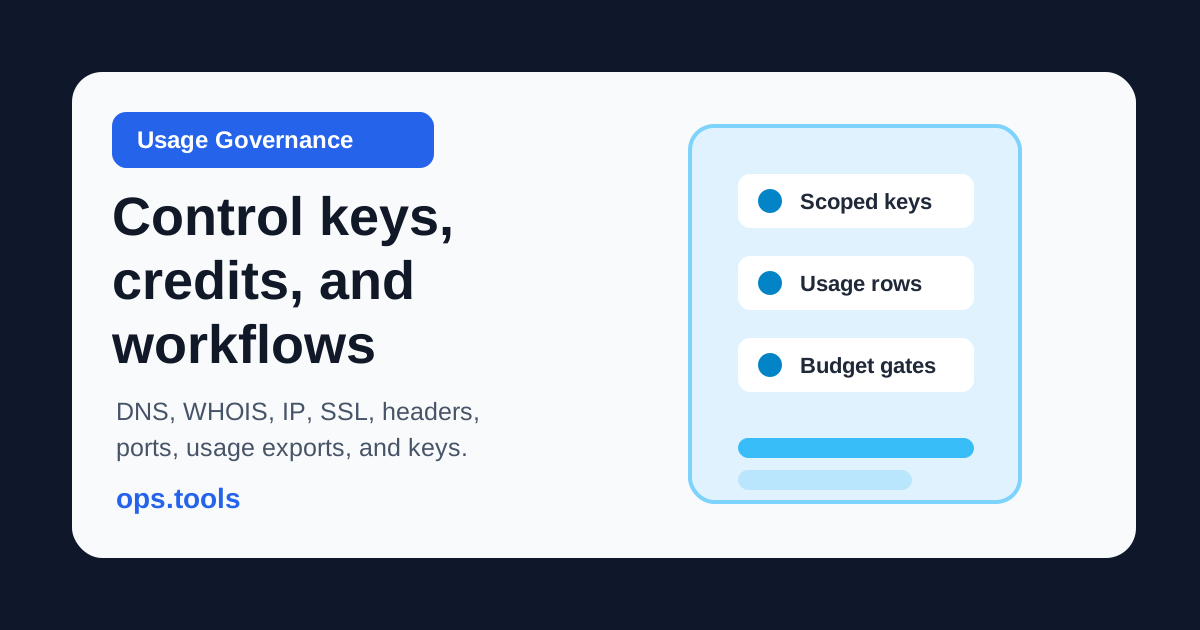
API Usage Governance 2026: Control Credits, Keys, and Team Access Before You Scale
Evaluate domain and network API providers through API key controls, usage exports, credit governance, workflow ownership, bulk jobs, and alert-safe automation.